Monday, May 30, 2022

My Trip to GENERAL SANTOS CITY: Satisfying Surprises

May 30, 2022

Modern-looking Airport

After two years of virtual conventions during the pandemic, our professional organization had decided that the coast was clear enough to hold our midyear convention 2022 in General Santos City in a hybrid format. Only the fellows from Mindanao can attend the meeting in person at the Greenleaf Hotel, while everyone else can only attend via the online platform. 

Convention Venue Greenleaf Hotel

I am from NCR, but I was invited to attend in person because of a position I held in the organization. Since I have not been to GenSan before, I decided to go. It was my first airplane ride since January 2020. This was only the fourth city in Mindanao which I had visited, after Zamboanga, Davao and Cagayan de Oro previously.

In the Grand Ballroom of Greenleaf

The way the scientific program was designed, there was still ample time for delegates to visit various tourist sites of General Santos City and its surrounding towns while still being able to attend the lecture sessions at the convention site. Here were the places I was able to visit during the five days I was there:

1. Strawberry Guyabano Farm in Tupi, South Cotabato

Entrance Archway

Initial Pathway

Scenic Sunset

This picturesque farm was located on the slopes of Mt. Matutum, an active strato-volcano which dominated the landscape of this area. The inner road on the way to the farm was quite memorable because it felt like a caterpillar amusement park ride as your car went up and down a long wavy stretch of road. This was because the road was built on the irrigation system serving the pineapple plantations on both sides of it.

Glamping Area

Peak of Mount Matutum at the back

The Giant Swing

Aside from their strawberry and guyabano plants it was named for, there were plenty of activities for tourists in there. There was a giant swing overlooking a high cliff. There are a few colorful cottages available for overnight stays, or "glamping." There was a scenic red barn near a small waterfall. There were plenty of ethnically-designed eating areas where meals are served. There was also a light and music show at 6 pm and 8 pm nightly. 

Red Barn and Waterfalls

One of the Relaxing Eating Areas

Light and Music Shows at Night

2. Isla Grande del Mar Beach Resort in Glan, Sarangani

The drive from GenSan going to this remote beach resort, practically at the southern tip of Sarangani province (and the whole country), was about 75 km. When we reached the town of Glan, there was a viewpoint on the side of the road called "Tour Town Glan" where there was a colorful statue of its Gong Dugong mascot and a view of the peak of Mt. Matutum from the other side of Sarangani Bay. 

Tour Town Glan viewpoint

Mt. Matutum from the other side of the bay

Gong Dugong, Mascot of Sarangani Bay 

When we reached the beach, we saw that it was at low tide, and people had to walk a long distance out from the beach before they can swim. They report that there was a lot of coral out there so it was hard to walk or swim. Some even came back to shore with wounds. Our driver told us that the beach further up from where our activity was set up (near the main clubhouse) had much smoother sand. 

Entering the resort

Water activities available

Two guys walking in the distance in low tide

The highlight of our activity there was when two newly-caught tuna fish were brought in to be carved for all the participants and served as sashimi. Being freshly cut directly from the fish, this sashimi was so fresh and sweet. My first serving was cut from from the pectoral area of the fish, and then a second serving cut from the belly section. I don't think I had ever eaten that much sashimi ever before. 

The Tuna!

The smoother far side


3. Lake Sebu in Lake Sebu, South Cotabato

To reach Lake Sebu from GenSan, we had to take a roadtrip of about 100 km that went through the whole city of Koronadal.  

How the zipline looked like at the start

The first stop we took was to see the Seven Falls. I was told that to be able to see all seven waterfalls there, you need to ride a zipline that gave you a bird's eye view of the entire valley. There are two ziplines, one 740 m long for a good view of Falls #2, and a second one 400 m long to see the other waterfalls. A friend who took the zipline told me that the ride, with video and photos, only cost him P500. He received the video and photos by email.

Falls #1

Falls #2

Because of time constraints, we decided not to take the zipline to be able to have more time to do more activities. We just decided to visit the first two waterfalls which can be reached by car -- namely Hikong Alu (the broad and strong Falls #1 which you can see up close) and Hikong Bente (the tall and majestic Falls #2 which you see from afar). I certainly did not expect to see these two beautiful yet powerful natural wonders one after the other. 

Punta Isla Lake Resort

View of the resort from floating restaurant

Tilapia pens on the lake

Next, we went to Punta Isla Lake Resort on the shore of serene Lake Sebu itself. The grounds were awash with colorful flowers and native T'boli motifs for some Instagrammable photo backgrounds. We decided to eat an early lunch at their floating restaurant well ahead of the noontime rush. Even if we were the only ones there at that time, it still took them 30-40 minutes because they still had to catch the tilapia straight from the lake.

Decor on the Floating Restaurant

Our Lunch Spread

Ethnic decor on the shore

Notable in their menu was their tilapia section which enumerated the 15 different ways they served their staple catch. My personal favorite was their chicharon tilapia, which was so tasty and crunchy that I could not get enough of it. Their kinilaw and their sinigang recipes were also very good. Some T'boli tribes people came on board to entertain and educate us (their elderly leader spoke very clear English) about their musical instruments and dances. 

T'boli ladies show off their musical culture

We left Lake Sebu just when the bulk of tourists were arriving for their lunch. Our next destintation was the workshop of the late Lang Dulay, a traditional weaver of t'nalak (the delicately-designed abaca cloth of the T'boli tribe which told stories using its patterns). You can see how the fine abaca fibers were stripped, what plants the color dyes came from and of course, some weaving in progress. They have a small gift shop for souvenirs to buy.

Introducing Lang Dulay and her T'nalak

Beginning to Weave

Stripping the Abaca into Fibers

On the way back to GenSan, we passed by a couple of famous food places along the highway. First stop was at Apareja in Koronadal City, noted for pioneering the buko halohalo. One generous serving of halohalo with ube ice cream served in a half-coconut shell cost P100. It is said that they use up to 1000 coconuts a day. Our next stop was Melts in Polomolok. One of their delicious premium cassava cakes cost only P160.

Buko Halohalo from Apareja

Cassava Cake from Melts

Before going back to the hotel, we asked the driver to bring us to see Plaza General Santos, which was located right in front of the City Hall of General Santos. There we saw the memorial statue of the general, while the plaque told the story of this military man who gave his name to this city previously called Dadiangas (after a local tree). It is always refreshing to see a green park with plenty of trees in the middle of a bustling city. 

The General Paulino Santos Memorial

Statue of Jose Rizal fronting the City Hall


Friday, April 15, 2022

OUR VISITA IGLESIA 2022: 7 CHURCHES IN PAMPANGA PROVINCE

 April 15, 2022

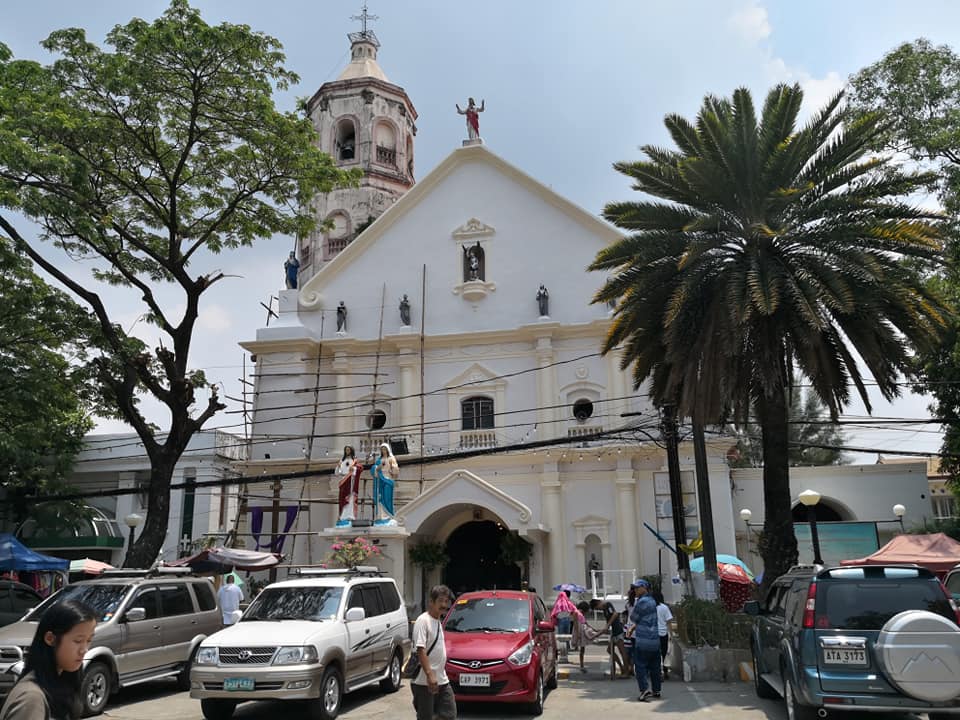
In previous years, we visited churches in Metro Manila. In 2015, we visited churches in Bulacan province (LINK). In 2016, we visited churches in Caloocan and Malabon. In 2017, we visited churches in Rizal province (LINK). In 2018, we visited churches in Cavite province (LINK). In 2019, we visited more churches in Bulacan province (LINK). 

After a two year break with the nationwide quarantine restrictions during the Covid-19 pandemic, we were finally able to resume our family's Maundy Thursday devotion this year 2022 yesterday. Things did not go too smoothly in the morning because of a massive traffic jam along NLEX which led us to take inner roads of Bulacan en route to visit churches in Pampanga province. 

1. SAN LUIS GONZAGA PARISH - SAN LUIS

This is a 19th-century church with a heavy imposing Baroque design and twin belfries located at Brgy. Poblacion in San Luis, Pampanga. The parish church is dedicated to Saint Aloysius Gonzaga, a blue-blooded Jesuit saint who died at the young age of 23. A papal symbol adorned the arch above the main door, with a window with capiz shutters and a piece of stained glass depicting the namesake saint located above it on the facade.


2. ST. PETER THE APOSTLE PARISH - APALIT

The first church in this town was built in 1641-45. This present church built in Neo-Renaissance style was finished in 1883, with the two belltowers done by 1896 purposely made low to withstand earthquakes. Since 2017, a holy fragment of a bone of St. Peter himself was enthroned in the Parish. This is said to be the only church that has a relic of St. Peter other than St. Peter's Basilica in Rome.


3. SAN NICOLAS DE TOLENTINO PARISH - MACABEBE

Augustinian friars established Macabebe parish with a building made of bricks in 1576-78. This present stone church may have started in the early 1600s and was expanded further in the late 1800s. The church is of a barn-style Baroque with Neo-classical features. It became a station of the Spanish army during the Revolutionary war and by Japanese army during World War II. The church was closed when we went so we were not able to see the altar.


4. STA. MONICA PARISH - MINALIN

The Augustinians built this Baroque church in the 1700s. It is noted for its facade which was adorned with statues of saints as in a retablo. There were also well-preserved arched prayer stations with called "capillas posas" outside the church. An 18th-century painting of Our Lady of Consolation with Sta. Monica and her son St. Augustine was located at the top level of the reredos of the main altar, which unfortunately was draped in purple when we visited. 


5. SAN GUILLERMO PARISH - BACOLOR

An original church was built by the Augustinian friars in Bacolor by 1576, one of the oldest churches in the country. This old church was eventually destroyed by earthquake and this present one was rebuilt by 1897 with ornate Baroque decorations on its facade. Following the destructive explosion of Mt. Pinatubo in 1991 buried half of the church in lahar. Townspeople were able to excavate the altar and restore it under the dome.


6. ST. JAMES THE APOSTLE PARISH - BETIS, GUAGUA

The church was established by the Augustinians in 1660-70 and dedicated to Saint James the Greater, the Apostle. It was declared a National Cultural Treasure by the National Museum and the National Commission for Culture and the Arts. The beautiful Renaissance-style frescoes of various religious scenes painted on its ceiling and walls had earned it a reputation of being the Sistine Chapel of the country.


7. HOLY ROSARY PARISH - ANGELES CITY

This church located right in the heart of Angeles City was constructed from 1877-96 reportedly by Filipinos indentured to serve the Spanish government by the "polo y servicios" policy, which made it a building of historical significance. Later on, the church grounds became the execution site for Filipino rebels from 1896-98, as well as a military hospital for the US Army at the turn of the 20th century. 


Thursday, April 18, 2019

OUR VISITA IGLESIA 2019: MORE OLD CHURCHES OF BULACAN PROVINCE

April 18, 2019

We did our family Visita Iglesia 2015 in Bulacan (MY ARTICLE). However, there were so many more historical churches in that province that we can do a part two and visit churches we missed the first time.

1. SAN PASCUAL BAYLON CHURCH - OBANDO

The Obando Church, founded in 1754, is famous because of the 3-day Obando fertility dance performed by devotees during the month of May starting from the church before going into the streets. These rites were held in honor of St. Pascual Baylon (for whom the church is named), St. Claire of Assisi ("Santa Clara pinong pino" of the folk song) and Our Lady of Salambao (this church is also the Diocesan Shrine of Our Lady of the Immaculate Concepcion of Salambao). 


2. SAN DIEGO DE ALCALA CHURCH - POLO, VALENZUELA

This church was completed in 1632, after the town of Polo gained its independence from Catanghalan, Bulacan in 1623. The belfry and entrance are the only original parts of the four-century old edifice that remain today after most of the main building was heavily damaged in World War 2. Formerly an independent municipality from 1623 - 1963, Polo is now a barangay of Valenzuela City, which is part of Metro Manila.


3. SAN MIGUEL ARCANGEL CHURCH - MARILAO

The present church was finished in the year 1868, but was severely damaged by fire during the Philippine revolution in 1898. In 1961 it was transferred to the Diocese of Malolos from the Archdiocese of Manila, whose secular priests handled the church since the Philippine American war. Today, this church had all the saints on their carrozas, bedecked in their colorful new finery and flowers, in the vestibule of the church awaiting the big procession of the Santo Entierro tomorrow night. 


4. OUR LADY OF THE ASSUMPTION CHURCH - BULAKAN

The first church was established by the Augustinian Fathers in 1575, but this was destroyed by fire in 1762. This present Neo-Byzantine-Romanesque stone church was re-started in 1812, and had since survived plenty of calamities. Historically, this church was where General Gregorio Del Pilar secretly distributed the pamphlets made by his propagandist uncle, Marcelo H. Del Pilar.


5. OUR LADY OF MT. CARMEL PARISH CHURCH - MALOLOS

In 1859, Barasoain became a separate town from Malolos with Our Lady of Mt. Carmel as its patroness. Fr. Francisco Arriola, was appointed first parish priest on June 1, 1859, built the convent. During the Spanish–American War, the Philippine Revolutionary Government under the leadership of Emilio Aguinaldo decided to move the capital north from Cavite to Malolos in Bulacan. Barasoain Church was chosen to be the site of the First Philippine Congress who was responsible for drafting Malolos Constitution in 1898. However in 1903, the town of Barasoain was abolished and was re-annexed within Malolos. in 1973, Pres. Marcos declared Barasoain Church as a National Shrine. Of the churches we visited today, this was most crowded, both in the church, and in the parking lot. 


6. MINOR BASILICA OF THE IMMACULATE CONCEPTION - MALOLOS

This grand church was built in 1814-1817. Its convent served as the office of Pres. Emilio Aguinaldo from 1989-1899. However, when Aguinaldo had to flee Malolos, the church was ordered burned down. It was rebuilt from 1902-1936. In 1962, it became a Cathedral of the the Diocese of Malolos. In 1999, it became the Minor Basilica of the Immaculate Conception. The miraculous image of Our Lady of the Immaculate Conception behind the main altar was sculpted by Donding Ople in 1950.  In 1970, a concrete statue of the Immaculate Conception was placed atop the bell tower.


7. ST. JOHN THE BAPTIST CHURCH - CALUMPIT

Calumpit is recognized as the first site of the evangelization by the Augustinian Order in Northern Luzon, covering Bulacan and parts of Pampanga. This church was completed in the middle of the 17th-century, making it the oldest church in Bulacan. It had fancy floral motifs and scrolls adorning its façade. Recently in 2015, this church gained social media notoriety when its parish priest had the parts of the facade and bell tower painted bright pink and white, causing netizens to call it a "giant cake". Thankfully, church officials seemed to have heeded the criticism as it does not look like a cake now.